AI Processed Human Approved
How do sending and receiving emails shape employee stress and productivity?
Key findings
- The paper proposes the Transactional Model of Email Stress (TMES), establishing that email stress is a dynamic process shaped by sender and receiver roles.
- Sending emails generally triggers eustress, offering senders a sense of control, task delegation, and productivity.
- Receiving emails primarily creates distress through incoming volume, constant interruptions, and emotional ambiguity in messages.
- Targeted email training and explicit organizational communication norms can mitigate distress while preserving productivity benefits.
What it means for you
- CIO / IT Executive: On Monday morning, initiate a discussion with your direct reports and heads of departments to explore piloting a specific email management training program for all employees, focusing on techniques that address both sender eustress and receiver distress, as outlined by the TMES model.
- IT Manager: On Monday morning, review the current email client settings and identify opportunities to implement or enhance features that automatically categorize or filter incoming emails based on sender or keywords, thereby reducing receiver distress for your team.
- Business Strategist: On Monday morning, draft a proposal for a new organizational communication norm that encourages concise and action-oriented email content from senders, aiming to maximize sender eustress by clearly delegating tasks and minimizing receiver distress caused by ambiguity.
- Researcher: On Monday morning, begin drafting a research proposal to empirically test the TMES model by designing a study that measures sender eustress and receiver distress across different organizational contexts and email usage patterns.
- Policymaker: On Monday morning, schedule a meeting with key stakeholders to discuss the development of an organizational policy that mandates specific email etiquette training, emphasizing balanced sender and receiver perspectives as informed by the TMES framework.
Summary
This conceptual study analyzes how email use produces contradictory perceptions of threat (distress) and opportunity (eustress). It organizes existing literature into a transactional model of email stress (TMES) that distinguishes between the experiences of message senders and receivers.ProblemEmail users suffer from ambivalence, feeling split between productivity gains and severe overload or constant interruptions. Existing research predominantly concentrates on the distress caused by receiving emails, overlooking the distinct dynamics and eustress associated with sending emails.
Transcript
Host: Welcome to A.I.S. Insights — powered by Living Knowledge. I'm Anna Ivy Summers, and today we're exploring a tool that almost every professional relies on daily, yet loves and hates in equal measure: email. We are diving into a fascinating study titled "Email stress: Towards a new understanding of its causes and impacts." Joining me to break down this research is our analyst, Alex Ian Sutherland. Welcome, Alex!
Expert: Thanks, Anna. It's great to be here. Email is an extraordinary double-edged sword. On one hand, it remains an indispensable backbone for workplace communication worldwide. On the other hand, it is constantly cited as a leading source and symbol of workplace stress.
Host: Absolutely. We've all felt that tension between the productivity gains email offers and the overwhelming sense of overload it creates. Why does email trigger such deeply contradictory emotions?
Expert: That ambivalence is precisely what this study sets out to explain. Historically, most workplace research on email stress focused almost exclusively on the receiver's point of view—things like dealing with an overflowing inbox, constant work interruptions, and late-night message notifications. But receiving is only half the equation. Roughly a third of our daily email volume consists of messages we actually draft, send, or reply to.
Host: That is a crucial distinction. How does the study bridge that gap between sending and receiving?
Expert: The author proposes a comprehensive theoretical framework called the Transactional Model of Email Stress, or TMES. It builds on established transactional stress theory, which views stress not as a fixed individual trait, but as an ongoing back-and-forth process between a person and their environment. Crucially, it distinguishes between distress—the negative threat we usually think of—and eustress, which is positive, stimulating stress tied to seizing opportunities.
Host: So sending and receiving emails actually generate completely different stress experiences?
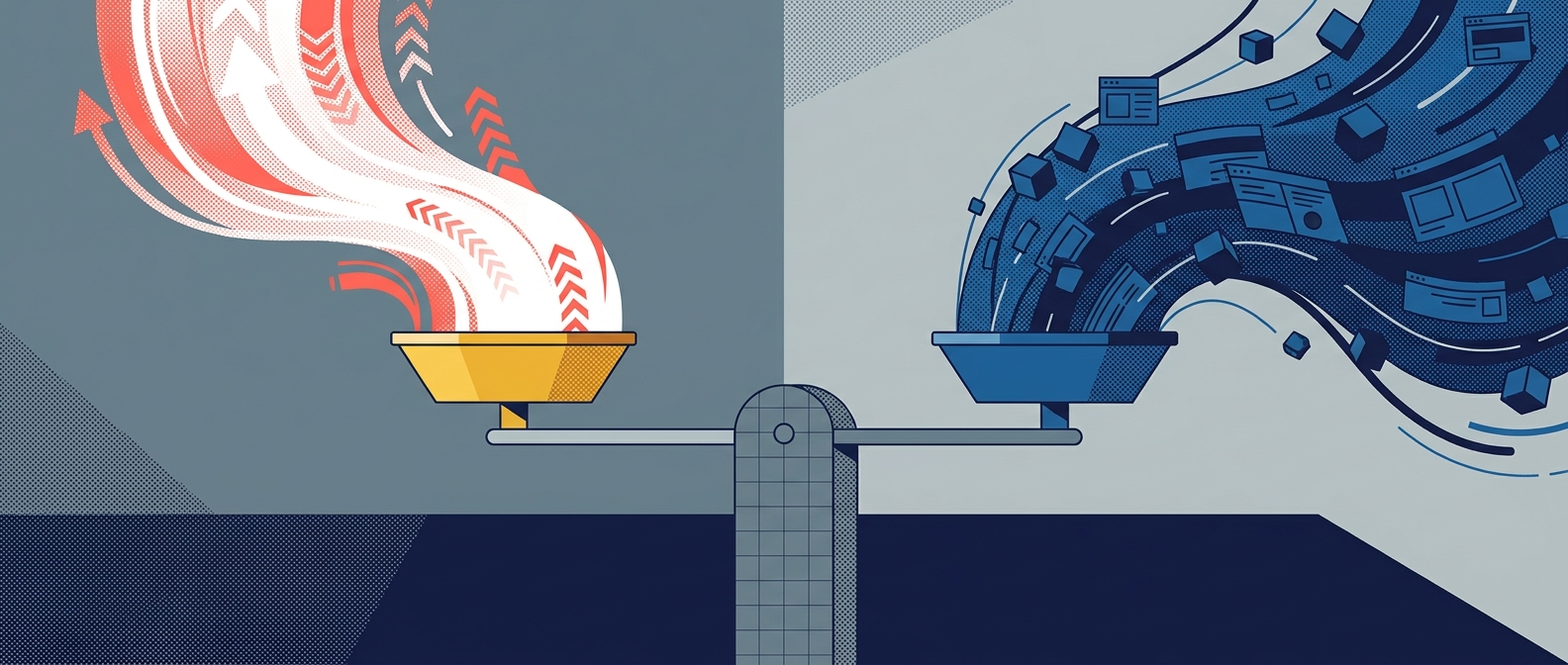
Expert: Exactly. The study reveals that sending emails is predominantly associated with eustress. When you write or reply to an email, you are generally in a position of control. You get to delegate tasks, offload work, set response standards, and choose when to communicate. Pressing "send" often provides a sense of accomplishment, relief, and productivity.
Host: While the receiver is on the receiving end of that delegated work!
Expert: Precisely. For receivers, the experience leans heavily toward distress. Receivers have very little control over incoming message volume. They face unpredictable interruptions, information overload, and the cognitive effort of interpreting ambiguous emotional tone or urgency. So, while the sender feels empowered, the receiver feels burdened. Because every user continuously alternates between being a sender and a receiver throughout the day, we experience a constant tug-of-war between eustress and distress, driving our love-hate relationship with email.
Host: That makes so much sense. It really explains why we feel so divided about our inboxes. Beyond individual feelings, what are the broader findings in the study regarding specific practices like copying multiple people or off-hours emailing?
Expert: The study outlines several key propositions. For instance, copying dozens of recipients might give senders a sense of thoroughness or self-protection, but it generates massive collective overload and low-value reading for receivers. Similarly, sending emails outside normal working hours offers flexibility for the sender, but it threatens receivers' work-life balance and drives invasive hyperconnection.
Host: What are the practical takeaways here for business leaders and organizations trying to curb burnout and improve communication?
Expert: First, organizations must realize that email stress isn't just an individual technical issue; it's a sociotechnical challenge involving corporate culture and daily habits. A major takeaway is the power of targeted email training. The study highlights that teaching senders how to write clearer, more concise, and properly addressed emails creates a virtuous ripple effect, significantly reducing distress across the entire organization.
Host: That sounds like a straightforward intervention with a huge potential payoff. What about organizational policies or communication charters?
Expert: The study suggests that organizational charters should explicitly differentiate between guidelines for sending emails and standards for receiving them. Establishing clear norms around expected response times, acceptable sending hours, and when to switch to alternative collaborative tools can prevent email from being used as the default option for every interaction.
Host: It sounds like cultivating digital empathy in our daily work habits is key.
Expert: Absolutely. Most managers report receiving irrelevant or poorly written emails, yet rarely stop to consider if their own sent messages cause that same frustration for others. Building self-awareness around how our sending habits impact recipients is essential.
Host: That is a powerful perspective shift. Understanding the dual nature of email stress gives us actionable ways to transform our inbox from a source of dread into a balanced productivity tool. Alex, thank you for walking us through this insightful study.
Expert: My pleasure, Anna.
Host: And thank you to our listeners for tuning in to A.I.S. Insights — powered by Living Knowledge. Until next time, manage those inboxes thoughtfully!